
My introduction to Magic: The Gathering began with a Fat Pack (now known as a bundle) of the Magic 2015 Core Set. It was simple to understand, straightforward to play with, a perfect introduction to a complicated game. Hornet Queens and Terra Stompers ruled the tables of middle school lunches. Nissa, Worldwaker was the most broken card ever conceived, and my most prized possession.
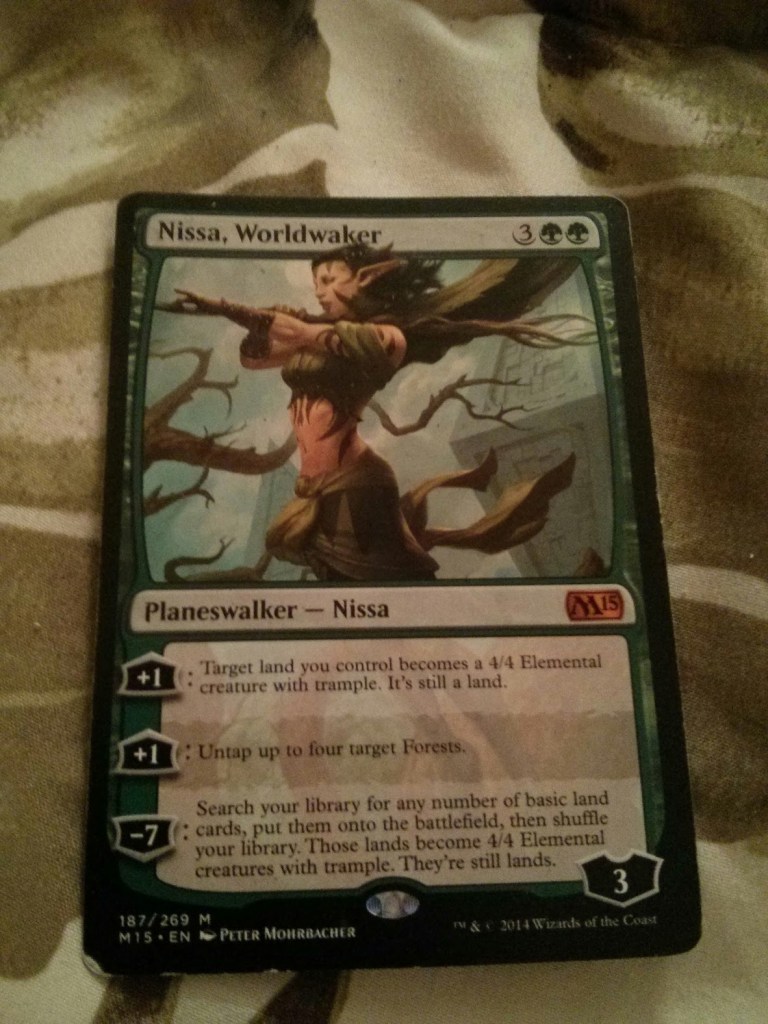
But Magic 2015 was not when I fell in love with Magic. In 2014, it was a pastime, a bonding activity with my friends, and a lunchtime hobby. I liked winning, and I liked the strategy involved in the game, but it was not much more than that to me.
When Khans of Tarkir released, I fell in love.
Everything that I hadn’t gotten from Magic 2015, I found on Tarkir. A rich world, full of strange creatures I hadn’t seen anywhere else, informed by cultures I had yet to learn about in school. Ainok, Aven, Naga, fantastical peoples I didn’t think were possible to conceive until I saw them. The artwork was gorgeous, the cards were colorful. This was a world at war with itself, of massive conflict and overwhelming beauty in equal parts.
The gold cards of Magic had always intrigued me the most, but I had always thought there were only two-color combinations. This world had three. It was radical.
And, of course, there was Siege Rhino.
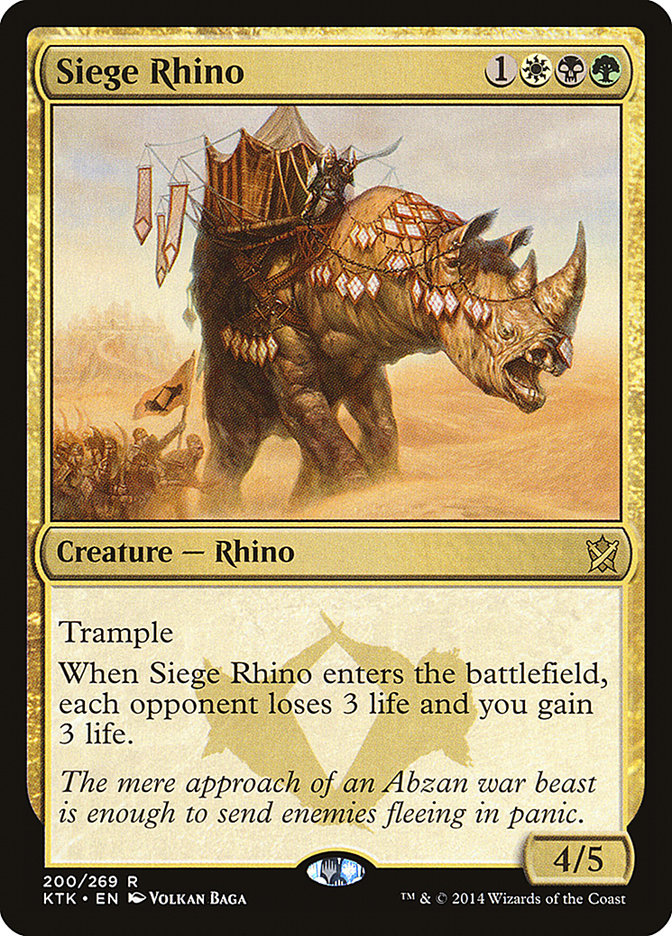
My first love, Siege Rhino. Gone were the Terra stompers of lunch tables, two turns earlier I could have a four mana 4/5 and a six life swing. Even me, in my developing adolescent brain, had sufficient card evaluation skills to see how immeasurably strong it was. The value was impossible to deny. One wasn’t enough. I needed more. The Abzan had earned my eternal allegiance.
My trade binder was repurposed, becoming mere fodder for more rhinos. I traded cards that were twice their value to secure them, to reach four: that beautiful, round number. One in fifteen. 0.066 repeating.
Despite my tenacity, it was an uphill battle. Everybody and their mother was playing siege rhino. In Standard there was Abzan Midrange and Abzan Control. In Modern there was Junk. Copies were plentiful and yet difficult to acquire. Day after day, I checked if my friends had gotten any, I begged my parents for more booster packs.
It was hard work, but in the end it paid off. I secured the fourth Siege rhino, I completed the four, my first playset.
In addition to the copious amounts of mental space Siege Rhino took up, it also had a large influence in my card evaluation when I started playing magic. I lived midrange. Individual card quality was my master, and as with many players around the time, it led me to Modern.
Back then, I remember checking MTGGoldfish over and over, watching videos from SaffronOlive. My lack of disposable income (I was thirteen) meant that the price tag on Modern decks was a near insurmountable barrier to entry. To play with my treasured Rhinos, I would need to spend masses of money on all the lands and spells to surround them: money that I didn’t have. Convincing my parents of the four-digit value of cardboard rectangles was out of the picture (maybe a good lesson for a thirteen year old anyhow).
What format then, could I play? What format was cheap enough for a thirteen year old, but competitive enough to scratch the itch?
At some point in 2015, On the MTGGoldfish metagame page, I noticed another format listed, one that I hadn’t heard of before. Pauper.
A click brought me to this unfamiliar land, populated only by commons. Many of the cards here were unknown, some older than I was, and the interactions between them were difficult to understand. These were not the Siege Rhino variety of rectangles. They did not win games on their own, but in conjunction with one another.
What a strange idea.
One of the decks, though, stuck with me. On the website it was only listed as “UB”. When I opened it, I found a list of cards unlike any other.
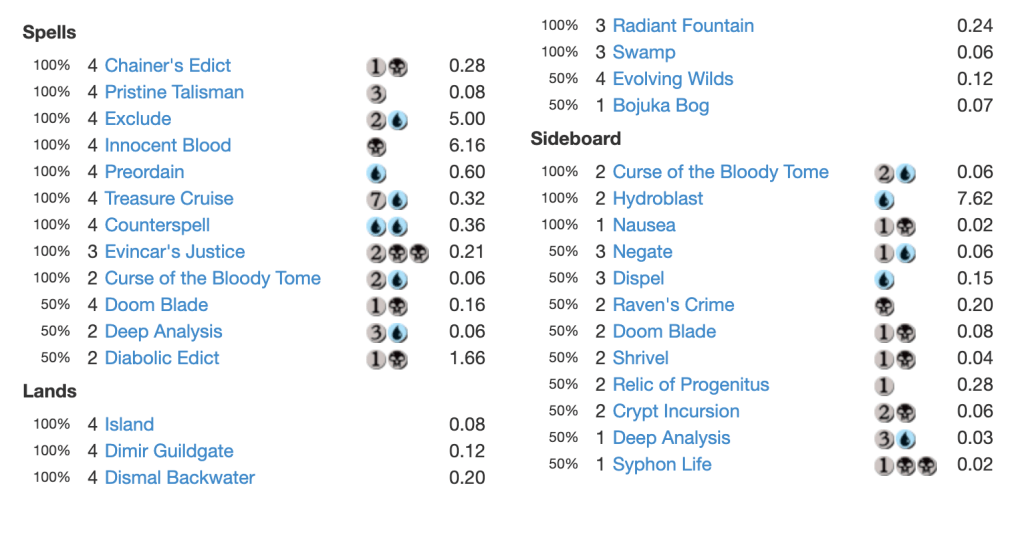
It was baffling to me; it broke every concept of deckbuilding I understood. Not a single creature in the main deck or sideboard, not a single clear win condition. Attacking or blocking was not an option. How did it win? How could it possibly end a game? This deck alone scared me away from Pauper. If this was the kind of wretched creation I could expect to play in this format, then I wanted nothing to do with it.
Back then, Pauper was mostly relegated to casual online events, and Mox Boarding House’s “Rags to Riches” events, where one could earn higher rarity cards by placing well. Despite what they had in common (ha), online and paper Pauper had yet to unify into one format, with a consistent banned list.
In the years after my brief and scarring run-in with Pauper, I eventually ended up building enough of a collection to play in Modern FNMs. My proudest creation was an esper control deck, built around Brain in a Jar and Beck // Call.
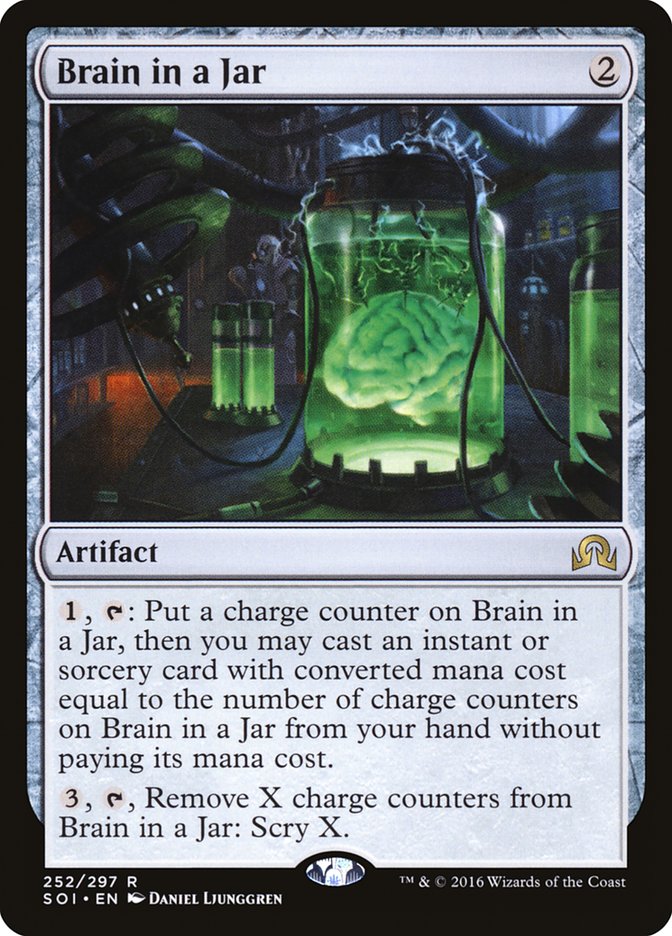
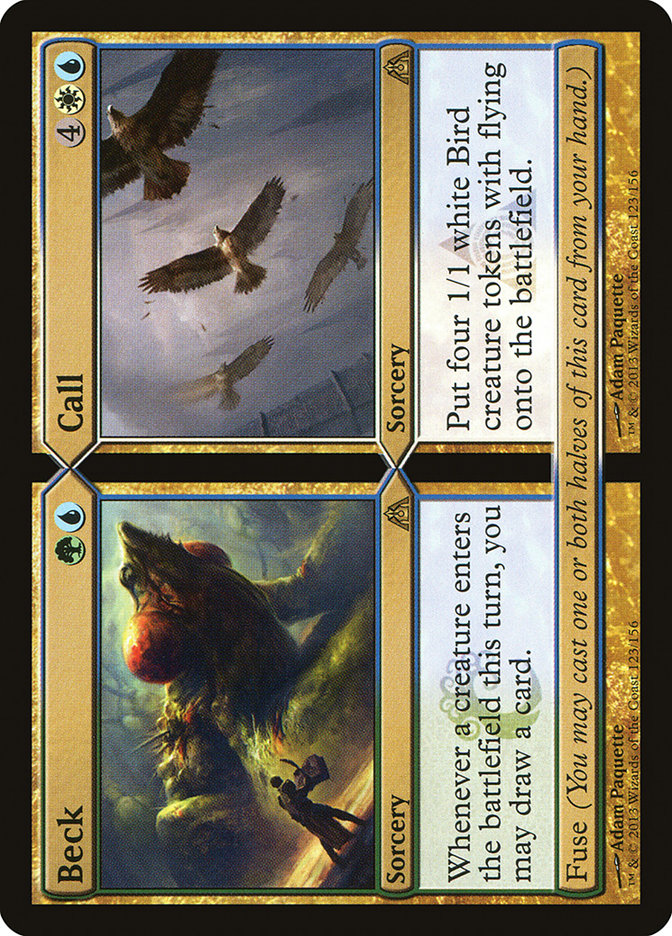
At the time, the ruling allowed Brain in the Jar to cast both halves of Beck // Call even with only enough charge counters to cast the Beck half of the card. It made for a solid finisher, and I am happy to report that I successfully took it to one FNM before the ruling was changed and my deck no longer functioned.
You see, I wasn’t the only one who noticed the interaction. Others were intent on breaking it (ha), and built a reanimation-combo deck that killed the opponent very early. The rules change was necessary, and my first Modern deck was its unintended casualty.
Though it was short lived, it marked a change in my approach to card evaluation. No longer was the individual the sole focus of my pursuit. I had seen the power of two cards combined, of a combo. Synergy was no longer alien.
In January of 2016, I was in the seventh grade, a point in my life that was as memorable as it was difficult. The small private school I had been at since kindergarten had begun to tighten its grip around me, the endless tests and assignments draining the fun from my daily life. The only place I knew, the place where I met nearly all my friends, had become inhospitable, hostile. When I looked out the window driving to school, it was as if the vibrance had faded from what I saw passing by.
That January was significant in Magic too. On the 22nd of that month, Oath of the Gatewatch was released. Where Battle for Zendikar had been a relative disappointment, leading to minimal impact in competitive formats outside of standard, Oath of the Gatewatch was much stronger. Of note, it was the set that introduced the colorless mana symbol that we all recognize now, and brought along with it the first cheap colorless Eldrazi creatures.
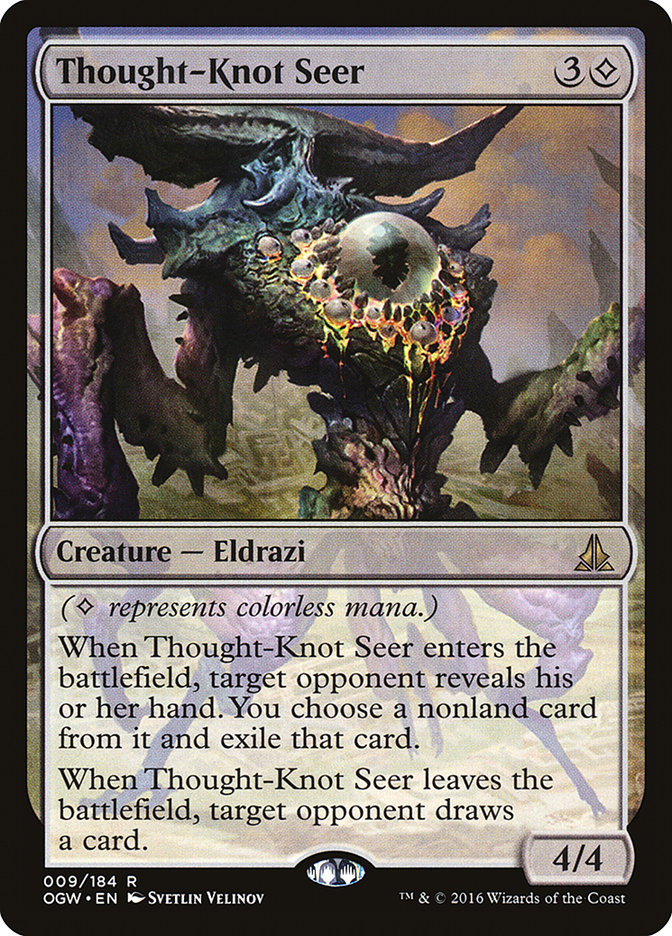
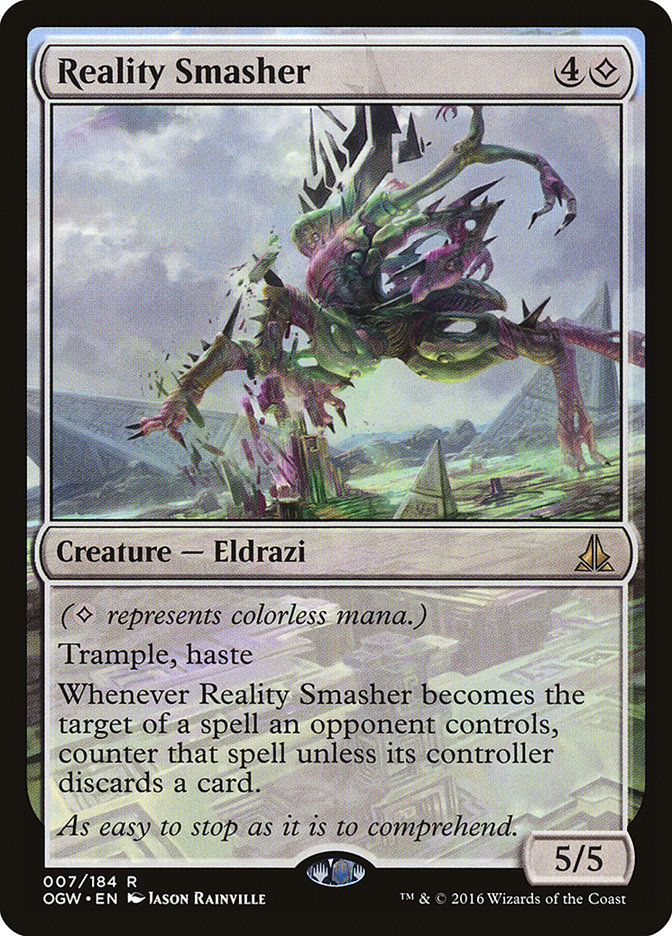
Pro Tour Oath of the Gatewatch was a Modern-focused event, and now it is commonly known as the defining event of Eldrazi Winter. The Top 8 included 6 colorless Eldrazi Aggro decks. Eldrazi Temple and Eye of Ugin, the core mana engine of the deck, had existed for years in Modern without creating problems, but now they had aggressively costed Eldrazi to power out. It was impossible to compete with the speed of the deck. Everything else in the format was forced to warp its gameplan to compete, or be relegated to an afterthought.
Ironically, Modern’s metagame and my own life seemed to have the same problem: a lack of color.
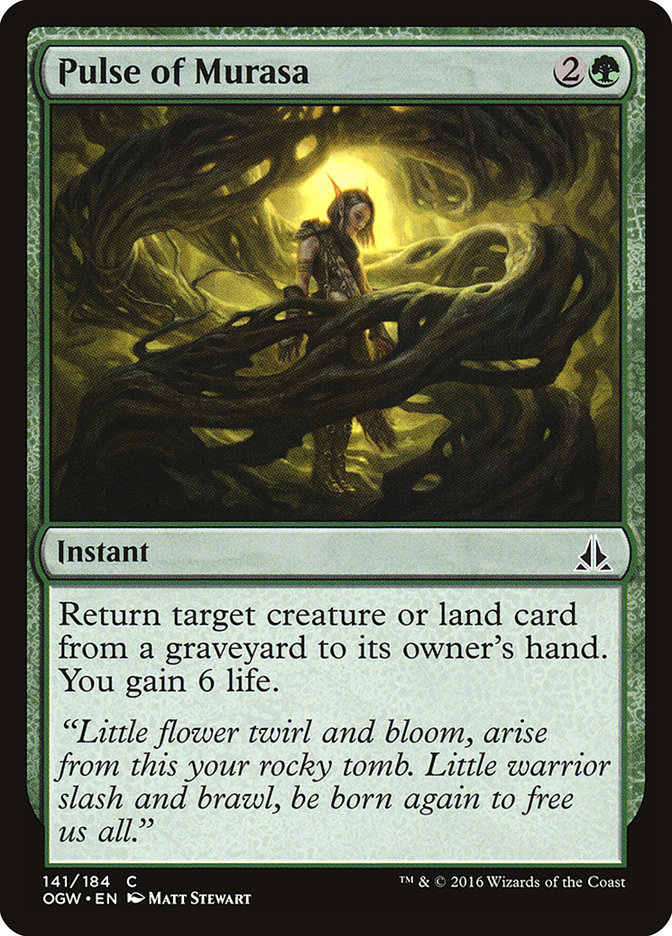
“Little flower twirl and bloom, arise from this your rocky tomb. Little warrior slash and brawl, be born again to free us all.”
My favorite card in Oath of the Gatewatch wasn’t an Eldrazi, though there were many to choose from. It wasn’t a pushed land like Mirrorpool, or a commander staple like Zendikar Resurgent. These cards were undeniably powerful, but they did not speak to me. In the depths of Eldrazi Winter, it was an unassuming green common that found me.
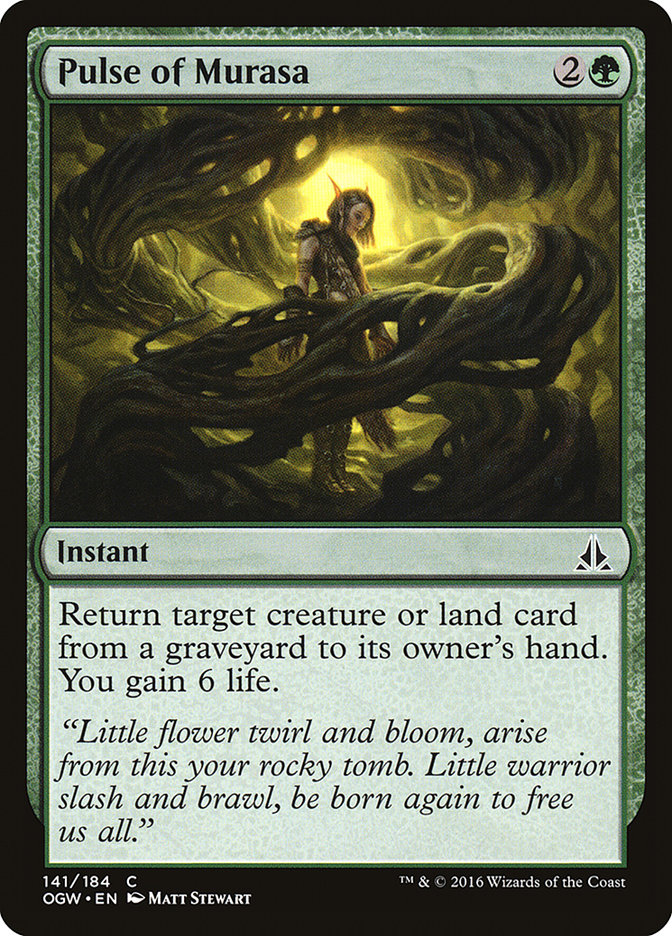
Was it a coincidence that the card that I was drawn to was one of rebirth, of revitalization? The card itself is satisfying in its simplicity. Is there a significance to it beyond that?
And for the second time Pauper called to me, like the echo of a thought. Was that the place where I could use this card?
That spring, I was diagnosed with depression, and I dropped out of the only school I truly remembered. I enrolled at an alternative school, a far cry from the fast-paced pushy institution I previously attended. The kids there didn’t play magic, but that was fine. I made new friends. I learned new things about myself.
Most importantly, gradually, I learned how to be happy again. I rediscovered the child that had been hiding. The eyes that could only see grey now found the vibrancy in the world around me.
And on the fourth of April, it was announced, like a punctuation of what I already knew. Eye of Ugin was banned.
Over the nine years since seventh grade, my relationship with Magic grew dormant. I checked spoilers, I texted my old friends about cool new cards. I built commander decks, and occasionally looked at the Modern metagame.
Over that time, the game I began playing in 2014 shifted into something new, something I didn’t entirely understand. The format that fueled my passion started to evolve too quickly to track, Modern Horizons pumping ever-more powerful cards into the format, my beloved Siege Rhinos pushed out of the stage. Commander became the de-facto casual way to play magic, and surged in popularity. Soon, two-set blocks became only one set. Universes Beyond brought millions of new fans to the game I loved.
When I graduated college in the fall of 2024, I was, as the cliched metaphor goes, a fish out of water. Eighth grade had turned into highshool, and in a quarantined haze, high school had turned into college, and then it was all done, and I was free. But where to go? What to do? Had I really studied what I loved? Was it even a good idea to do what I loved for a job?
In the absence of direction, I wrote. I filled the spaces between meaning with words, hoping that they would be enough, that they could carve out the path for me. And in the time I wasn’t writing, I rediscovered my love of Magic. Truthfully, it had never disappeared, only taking a backseat to the social and academic pressures of high school and college, waiting to resurface when the time was right.
Though I was now an adult, out in the world, the same money problems persisted. I had sold most of my expensive cards in the summer after high school, and the ones that remained were mostly a part of commander decks, my lone remaining holdovers from that time in my life. Though I wanted to get back into sixty-card magic. I couldn’t spend a thousand dollars on cardboard any more than I could ten years ago.
So I reached back out to an old friend.
I gave Pauper a second chance. In the time I had been away from the game, it had unified its online and paper scenes into one format, and a panel had been formed to govern card decisions: the Pauper Format Panel. Like many formats were, it was unrecognizable from what it had been, but in some ways, it felt strangely familiar. For a while I couldn’t figure out what it was, then it clicked into place.
Was Glee combo so different from Splinter Twin? Mono Red Burn and Madness Burn, Affinity and Jund, Dredge and Dredge (long may it reign). The Pauper I saw felt in many ways like the Modern I was introduced to way back in 2014. Not only that, but it was affordable.
So I found a list online, my only criteria being that it included Pulse of Murasa. I discovered that a few game stores near me host Pauper nights, and I took Gruul Monsters to my first two pauper events. From then on, I was hooked.
As I played, the format slowly began to unveil itself to me. Interactions and combos, specific lines and value loops, it was a format of synergy, each deck not just a collection of cards but the sum of its parts, an organism that needed every piece to function as a whole.
Gruul Monsters didn’t last long. Though I enjoyed the allure of ramping and casting big creatures, I craved interaction, and I quickly moved on. I flipped from deck to deck, tinkering and searching for the place to play my favorite card. Some months later, I found Flicker Tron.
It was Flicker Tron, perhaps more than any other deck I played, that taught me the lesson I did not understand when I looked at Pauper for the first time. What thirteen-year-old Finn could not fathom was that, in the right deck, not dying is a win condition. Surviving is a virtue. In Flicker Tron, Pulse of Murasa is included in virtually every list, vital to the deck’s staying power in the late game, emblematic of its resilience.
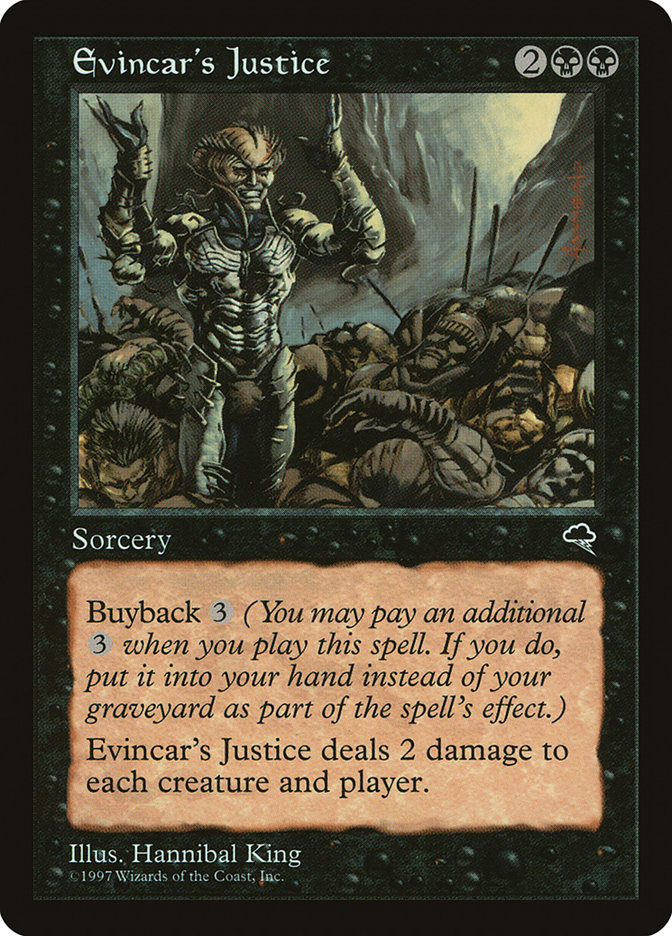
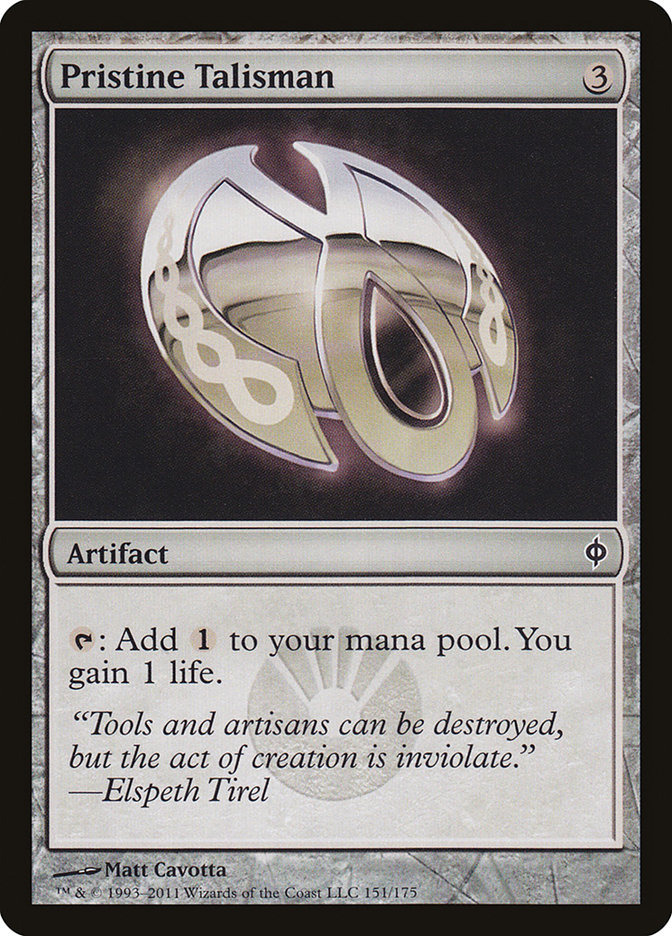
It wasn’t long until I revisited that old UB list that baffled me. Armed with my newfound knowledge, I was surprised to see I understood it. With two Pristine Talismans on the battlefield tapping to pay for it, Evincar’s Justice only deals damage to your opponent. It doesn’t win quick, but it is inevitable.
In the new empty spaces in my life, I rediscovered my love of Magic. I found a new joy in Pauper. In many ways, it is magic at its best: accessible, competitive, welcoming and deep. It rewards good players for playing well. Wins feel earned.
I live near Mox Boarding House, the same place where paper Pauper began. When I went 3-2 at my first Rags to Riches, I sold my winnings to buy more Pauper cards. Everyone was friendly. Everyone was having a good time.
And now, ten years after we first found ourselves in Tarkir, Magic returned. Tarkir wasn’t just significant for me, it is almost universally one of Magic’s most beloved expansions, and the excitement around Tarkir: Dragonstorm’s release was palpable. Though it is nothing more than a coincidence, it all feels almost cyclical. Over the ten years since Khans of Tarkir, I changed in more ways than I could ever hope to name, and yet I return to the plane with the same childlike joy I once had.
The only difference is this time, I’m most excited for the commons.
Tarkir: Dragonstorm brought with it a new rhino, this time downshifted to an uncommon.
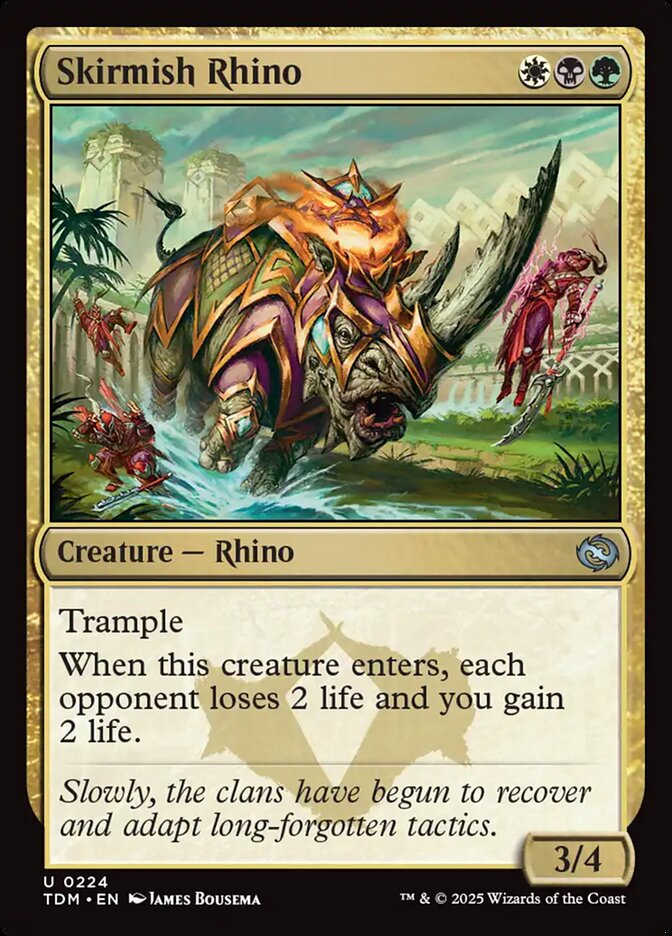
Smaller but just as aggressively costed, it is a far-from subtle reference to its big sibling. Despite that, Skirmish Rhino isn’t the card that reminds me of Siege Rhino the most. The real second coming of Siege Rhino is legal in Pauper, and elicits almost exactly the same kind of groans and complaints as its spiritual predecessor.
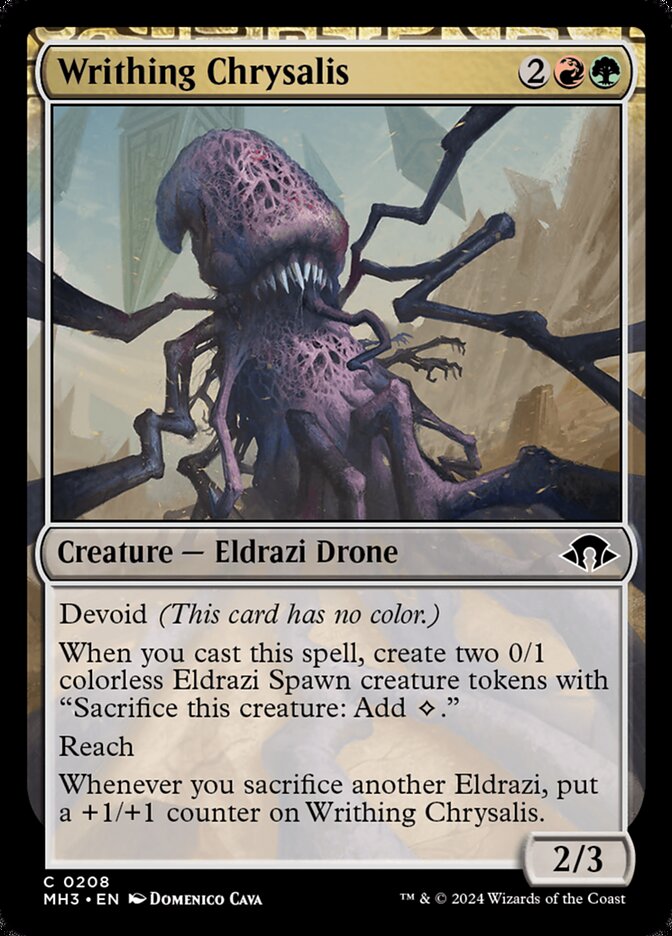
It does too much! It’s too aggressively costed! It’s better than anything else you can do at four mana!
It’s perfect.
 A Penny For My Thoughts
Leave a comment